
Phase 1 RFP (applications closed)
Official Phase 1 RFP. The application window closed September 7, 2026.
Department of Health and Human Services (DHHS)
Division of Child Development and Early Education
Last updated October 2, 2026
Connect to this project
The application window for the Phase 1 evaluation partner has closed, and proposals are being reviewed. A partner is expected to be selected in October 2026 to plan a unified evaluation of two rural child care pilots. The planning work will define comparison groups and data needs, common measures, a cost-effectiveness approach, and a costed plan for a potential full evaluation. The full evaluation would require separate funding.
North Carolina is preparing to test two complementary approaches to expanding rural child care access. The Rural Child Care Business Sustainability Pilot will work in approximately three communities to strengthen existing providers through child care management technology, standardized business coaching, and operational capacity grants. The Family Child Care Home Direct Support Pilot, established by Session Law 2026-41, will work through three Councils of Governments in the Coastal Plain, Piedmont, and Mountain regions. It will focus on creating new family child care homes through recruitment, startup assistance, technology and substitute-teacher supports, and ongoing mentorship. A separately procured statewide survey will gather families' child care needs, preferences, current arrangements, and barriers to care, with intentional oversampling in the six pilot communities.
The evaluation will help North Carolina decide when to strengthen existing child care supply, when to create new supply, and when to combine both approaches. Findings should support decisions about implementation, cost-effectiveness, and statewide scale. The final analysis must distinguish causal or quasi-experimental evidence from descriptive findings, implementation findings, and emerging hypotheses so decision-makers can see both what was learned and how strongly the evidence supports each conclusion.
During Phase 1, the selected evaluator will be expected to:
Phase 1 will produce the practical foundation for a potential full evaluation:
Phase 1 is philanthropically funded with a budget of $30,000-$90,000, depending on the proposed scope of work. Phase 2, full evaluation implementation, is not yet funded and is contingent on the Office securing dedicated funding informed by the Phase 1 evaluation plan and costed scope of work.
Data availability and quality will be assessed during the first phase. The evaluation partner should not assume that the two pilots currently use identical definitions, reporting processes, or data systems; common definitions and pilot-specific limitations will be documented.
Teams should be able to design and carry out a rigorous, practical multi-site evaluation; develop credible comparison strategies; combine administrative, survey, financial, and qualitative evidence; assess costs and cost-effectiveness; and translate findings into clear guidance for decision-makers.
Experience with child care or early childhood programs and government pilots is preferred. Familiarity with North Carolina's child care system and DCDEE data is helpful but not required.
Friday, August 21, 2026, 3:00 PM ET
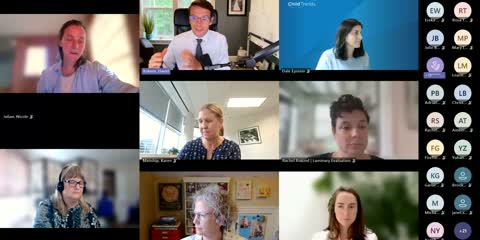
Virtual information session. Watch the recording · Download the slides (PDF)
Monday, August 24, 2026
RFP released and applications opened.
Monday, September 7, 2026, 11:59 PM ET
Application window closed.
September 2026
Evaluator interviews completed.
October 2026
Next upPartner selected.
The evaluator will define the final data specification, including variables, units of analysis, collection frequency, source, and responsible party. Expected inputs include provider enrollment and operations data; licensed and operational capacity; vacancies; infant and toddler capacity; provider creation and retention; staffing; financial sustainability; implementation records; qualitative interviews; and findings from the statewide family child care needs and preferences survey. The design should establish baseline measures before intervention wherever feasible, identify the data needed for a comparison condition for each pilot, and specify which elements require provider consent or additional privacy and data-sharing protections.
Proposals should demonstrate:
Phase 1 RFP (applications closed)
Official Phase 1 RFP. The application window closed September 7, 2026.
Questions and answers (Google Doc)
Official responses to prospective evaluator questions.
Information session slides (PDF)
Slide deck from the August 21, 2026 virtual information session.
Full project scope (PDF)
Complete official reference dated August 14, 2026, including the full project description, anticipated deliverables, and proposal requirements.
Statewide family survey
A separately procured survey of families with young children, including oversamples in the six pilot communities; final instruments and files will be incorporated into the evaluation as available.
Pilot implementation and administrative data
Final sources, access procedures, and common definitions will be established during the evaluation-design phase.
The opportunity is intended for an independent evaluation firm, research organization, or consultant with experience designing and conducting multi-site, multi-intervention evaluations. Proposals should identify the Phase 1 team, relevant roles, examples of comparable evaluations the respondent has both designed and executed, and capacity and interest to carry out Phase 2 if funding is secured.
Jenna Nelson, M.A.
Child Care and Early Education Fellow
Office of Governor Josh Stein
jenna.nelson@nc.gov919-389-7964Connect to this project
Jenna Nelson, M.A.
Child Care and Early Education Fellow
Office of Governor Josh Stein
jenna.nelson@nc.gov919-389-7964